5 Letter Words That End With D: A Complete Word List
Finding the right word becomes much easier when you know its length and final letter. If you are looking for 5 letter words that end with D, this complete word list can help you find suitable answers for Wordle, crosswords, Scrabble, spelling activities, and other word games.
Every word included below has exactly five letters and ends with the letter D. Along with each word, you will find a simple meaning so you can understand how it is used. The list focuses on genuine five-letter words rather than adding longer words simply because they happen to end in D.
5 Letter Words That End With D
There are many useful five-letter words ending with D, particularly past-tense verbs. Words such as “ached,” “baked,” “cared,” and “dared” are common examples. Other words, such as “laird” and “staid,” have different word forms and meanings.
Here is a complete selection of exactly five-letter words ending with D:
| Word | Meaning |
|---|---|
| Ached | Felt a continuous or dull pain |
| Aided | Helped or assisted someone |
| Aired | Broadcast something on television or radio |
| Asked | Requested information or made a request |
| Baked | Cooked food using dry heat |
| Baled | Packed something into a bale |
| Bared | Uncovered or exposed something |
| Biked | Rode a bicycle |
| Bored | Felt uninterested or caused someone to lose interest |
| Caked | Covered with a thick layer |
| Cared | Felt concern, affection, or interest |
| Ceded | Gave or surrendered something |
| Cited | Referred to something as an example or source |
| Coded | Converted information into a code |
| Cowed | Intimidated or frightened someone |
| Cried | Shed tears or called out loudly |
| Dared | Had the courage to do something |
| Dated | Had a particular date or spent time romantically with someone |
| Diced | Cut into small cubes |
| Dined | Ate a meal |
| Doped | Treated or mixed with a substance |
| Dried | Had moisture removed |
| Eared | Having ears or ear-like parts |
| Faced | Confronted or dealt with something |
| Faded | Became less bright, strong, or noticeable |
| Famed | Widely known or celebrated |
| Feted | Honored or celebrated |
| Filed | Placed in an organized record or submitted officially |
| Fined | Charged a monetary penalty |
| Fired | Dismissed from a job or caused something to burn |
| Fixed | Repaired or made stable |
| Flied | Hit a fly ball in baseball |
| Freed | Released from control or confinement |
| Fried | Cooked in hot oil or fat |
| Gaped | Looked with the mouth open in surprise |
| Gated | Provided with or enclosed by a gate |
| Glued | Attached something using glue |
| Hared | Ran quickly like a hare |
| Hated | Felt strong dislike |
| Heard | Perceived a sound with the ears |
| Hiked | Walked a long distance, usually outdoors |
| Hired | Employed someone or paid for a service |
| Hoped | Wanted or expected something to happen |
| Hosed | Sprayed or washed using a hose |
| Idled | Spent time without working or allowed something to remain inactive |
| Jaded | Tired, bored, or lacking enthusiasm |
| Joked | Said something intended to be funny |
| Laced | Fastened or decorated with laces |
| Laded | Loaded something, especially onto a vehicle or ship |
| Laird | A Scottish landowner |
| Liked | Enjoyed or found something pleasing |
| Lined | Arranged or covered something with a line or layer |
| Lived | Remained alive or existed |
| Loved | Felt deep affection for someone or something |
| Mated | Paired with another |
| Mixed | Combined different things |
| Moved | Changed position or location |
| Named | Gave someone or something a name |
| Noted | Observed, mentioned, or recorded |
| Paged | Contacted someone using a pager |
| Piled | Arranged things into a heap |
| Piped | Carried or conveyed something through a pipe |
| Plied | Worked at or traveled along a particular route |
| Pried | Used force to open or separate something |
| Raced | Competed in a race |
| Rated | Gave something a particular score or level |
| Raved | Spoke enthusiastically or wildly |
| Riled | Made someone annoyed or angry |
| Roped | Tied or caught something with a rope |
| Ruled | Governed, controlled, or made a decision |
| Sated | Completely satisfied, especially after eating |
| Sawed | Cut something using a saw |
| Shied | Moved away suddenly because of fear |
| Sided | Supported one person or group |
| Sized | Classified or adjusted according to size |
| Skied | Traveled or moved on skis |
| Soled | Repaired or replaced the sole of a shoe |
| Spied | Observed someone or something secretly |
| Staid | Serious, calm, and not very exciting |
| Stied | Kept or housed in a pigsty |
| Tamed | Made something less wild or easier to control |
| Taped | Attached or covered something with tape |
| Tared | Weighed something after allowing for the weight of its container |
| Tided | Helped someone through a difficult situation |
| Tiled | Covered a surface with tiles |
| Timed | Measured how long something took |
| Tired | Feeling the need for rest |
| Toned | Gave something a particular tone or improved physical firmness |
| Tried | Attempted to do something |
| Tuned | Adjusted something for better performance |
| Typed | Entered text using a keyboard |
| Vexed | Annoyed, frustrated, or troubled |
| Vowed | Made a serious promise |
| Waded | Walked through water or another substance |
| Waned | Became weaker, smaller, or less intense |
| Wared | Dealt in or traded goods |
| Waxed | Applied wax or became larger or stronger |
| Wield | Used or handled something effectively |
| Wiped | Cleaned or removed something by rubbing |
| Wired | Connected with wires |
| Wowed | Greatly impressed someone |
| Yawed | Turned or moved from side to side |
Common 5 Letter Words Ending in D
Some five-letter words ending in D are commonly used in everyday English. The table below includes each word, its simple meaning, and an example sentence to make the usage clear.
| 5 Letter Word | Meaning | Example Sentence |
|---|---|---|
| Ached | Felt a dull or persistent pain. | My legs ached after the long walk. |
| Aided | Helped or assisted someone. | The nurse aided the injured man. |
| Asked | Requested information or made a request. | She asked me a difficult question. |
| Baked | Cooked using dry heat, usually in an oven. | Mom baked a fresh chocolate cake. |
| Cared | Felt concern, affection, or interest. | He cared deeply about his family. |
| Dated | Had a particular date or spent time romantically with someone. | They dated for several months before getting married. |
| Faced | Confronted or dealt with something. | She faced the challenge with confidence. |
| Fixed | Repaired, corrected, or made something secure. | The mechanic fixed my old car. |
| Hired | Employed someone or paid for a service. | The company hired a new manager. |
| Liked | Enjoyed or found something pleasing. | I liked the movie very much. |
| Loved | Felt deep affection for someone or something. | She loved reading books before bed. |
| Named | Gave someone or something a particular name. | They named their puppy Max. |
| Noted | Observed, mentioned, or recorded something. | The teacher noted the student’s improvement. |
| Raced | Competed in a race or moved very quickly. | The two runners raced toward the finish line. |
| Tired | Felt the need for rest or lacked energy. | I felt tired after a busy day. |
| Tried | Attempted to do or accomplish something. | He tried to solve the puzzle. |
| Typed | Entered words or characters using a keyboard. | She typed the report on her laptop. |
| Wiped | Cleaned or removed something by rubbing. | He wiped the table with a cloth. |
5 Letter Words Ending With D for Wordle
Five-letter words are especially important for Wordle-style games because the answer itself contains five letters. If you know that the final letter is D, you have already established an important part of the word pattern.
For example, the pattern might look like:
_ _ _ _ D
You can then compare possible answers such as “ached,” “baked,” “cared,” “dated,” “faced,” “fixed,” “hired,” “liked,” “lived,” “loved,” “mixed,” “named,” “noted,” “raced,” “tired,” and “tried.”
The best approach is to combine the known positions with letters that have already been eliminated. If the puzzle tells you that A is not present, for example, words such as “ached” and “baked” can immediately be removed from consideration.
Another useful strategy is to pay attention to common endings. Many five-letter words ending in D are past-tense verbs with the “-ed” ending. Once you recognize that pattern, you can quickly think of possible answers.
5 Letter Words Ending With D and Their Meanings
Understanding the meaning of each word can be just as important as knowing its spelling. This is particularly true for crossword puzzles, where the clue usually describes the meaning rather than giving you the letters.
For example, if a clue asks for a five-letter word meaning “helped,” the answer could be “aided.” If the clue means “attempted,” the answer is likely “tried.” A clue describing someone who is “annoyed” could point toward “vexed.”
Similarly, “laird” refers to a Scottish landowner, while “staid” describes someone or something serious and restrained. These words may be less common in everyday conversation, but knowing them can be valuable when solving challenging word puzzles.
5 Letter Words Ending With D for Crossword Puzzles
Crossword puzzles often require you to combine a definition with a specific number of letters. A five-letter word ending in D can have many possible forms, so the clue’s meaning is essential.
Suppose the clue is “felt pain.” The answer could be “ached.” If the clue is “gave help,” “aided” may fit. If the clue is “strongly disliked,” “hated” is a suitable answer.
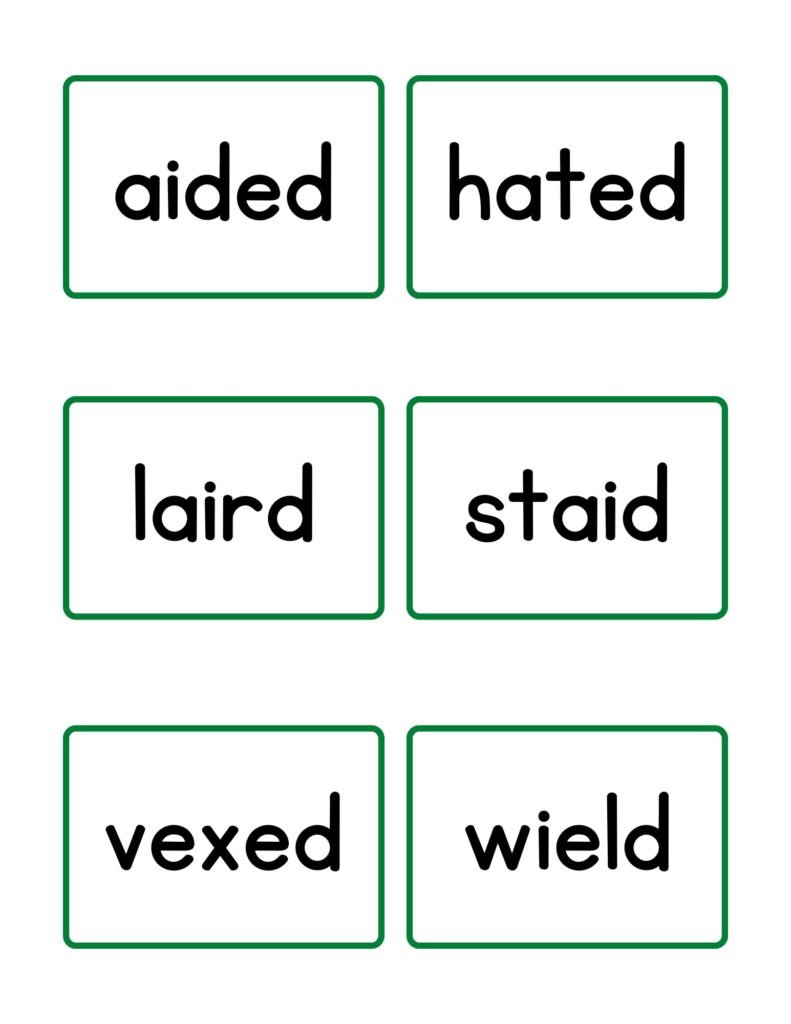
Words such as “laird,” “staid,” “vexed,” and “wield” can also be useful because they have distinct meanings that may appear in more difficult crossword clues.
5 Letter Words Ending in D by First Letter
Organizing words by their first letter can make the list easier to scan when you already know the beginning of the answer.
Words beginning with A include “ached,” “aided,” “aired,” and “asked.” These are mostly common words that appear regularly in everyday English.
Words beginning with B include “baked,” “baled,” “bared,” “biked,” and “bored.” Many of these are past-tense verbs.
Words beginning with C include “caked,” “cared,” “ceded,” “cited,” “coded,” “cowed,” and “cried.”
Words beginning with D include “dared,” “dated,” “diced,” “dined,” “doped,” and “dried.”
Words beginning with F include “faced,” “faded,” “famed,” “feted,” “filed,” “fined,” “fired,” “fixed,” “flied,” “freed,” and “fried.”
Words beginning with H include “hared,” “hated,” “heard,” “hiked,” “hired,” and “hoped.”
Words beginning with L include “laced,” “laded,” “laird,” “liked,” “lined,” “lived,” and “loved.”
Words beginning with M include “mated,” “mixed,” and “moved.”
Words beginning with N include “named” and “noted.”
Words beginning with P include “paged,” “piled,” “piped,” “plied,” and “pried.”
Words beginning with R include “raced,” “rated,” “raved,” “riled,” “roped,” and “ruled.”
Words beginning with S include “sated,” “sawed,” “shied,” “sided,” “sized,” “skied,” “soled,” “spied,” “staid,” and “stied.”
Words beginning with T include “tamed,” “taped,” “tared,” “tided,” “tiled,” “timed,” “tired,” “toned,” “tried,” “tuned,” and “typed.”
Words beginning with V include “vexed” and “vowed.”
Words beginning with W include “waded,” “waned,” “wared,” “waxed,” “wield,” “wiped,” “wired,” and “wowed.”
Words beginning with Y include “yawed.”
How to Use This List to Solve Word Games
When you are solving a word puzzle, begin with the information you already have. If you know the answer has five letters and ends with D, write the basic pattern as “____D.” Then consider the letters that have already appeared in your clues.
Next, think about familiar five-letter words that fit the pattern. Common words are usually the best starting point because they are more likely to be accepted by popular word games.
If you still cannot find an answer, use the meanings in this article to match the puzzle’s clue. A definition can quickly separate similar-looking words. For instance, “attempted” points toward “tried,” while “helped” points toward “aided.”
It is also useful to remember that not every word ending in D is a regular past-tense verb. “Laird,” “staid,” and “wield” demonstrate that other word patterns exist. Keeping these alternatives in mind can help when common “-ed” words do not fit.
More Word Lists You’ll Enjoy!
Final Thoughts
Finding 5 letter words that end with D becomes much easier when you combine word length, letter position, and meaning. The list above contains exactly five-letter words, making it useful for Wordle-style games, crossword puzzles, Scrabble, spelling practice, and general vocabulary building.
From familiar choices such as “asked,” “baked,” “cared,” “fixed,” “loved,” and “tried” to less common words such as “laird,” “staid,” and “wield,” these words cover a useful range of English vocabulary.
When you are stuck on a puzzle, start with the final letter D, consider the letters you already know, and then use the meanings to narrow down the possibilities. With practice, recognizing these word patterns will become faster and more natural.

1 Response
[…] 5 Letter Words That End With D […]