2 Letter Words: Complete List of Two-Letter Words With Meanings
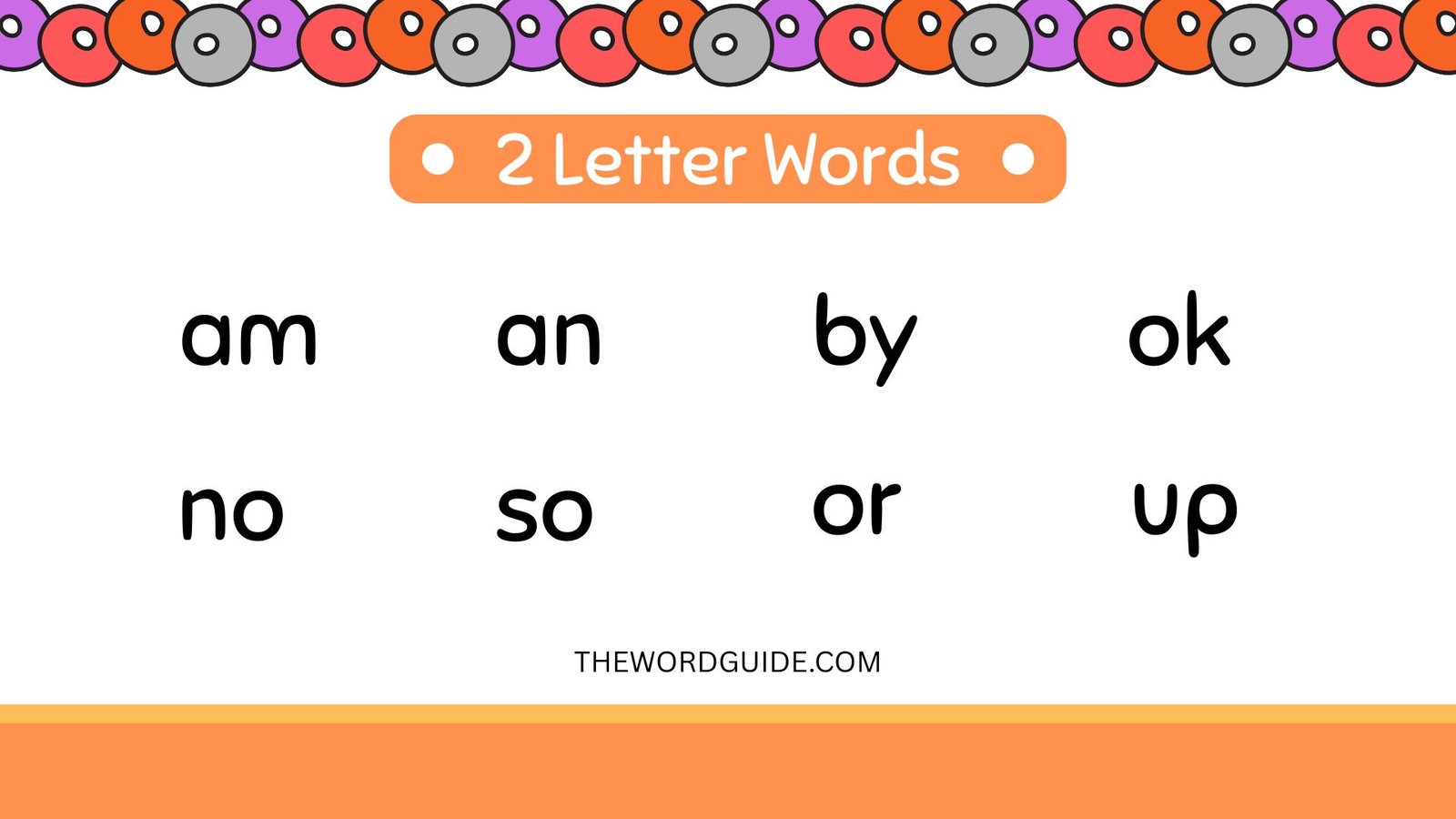
Two-letter words may be small, but they are an important part of language learning, reading, writing, and vocabulary development. Many common English sentences depend on short words such as am, an, as, at, be, by, do, go, he, if, in, is, it, me, my, no, of, on, or, so, to, up, us, and we. These words may contain only two letters, but they help express actions, relationships, ideas, emotions, and complete thoughts.
Learning 2 letter words is useful for children, students, English language learners, and anyone who wants to improve their vocabulary. These words are also valuable in word games because short words can fit into limited spaces and create new combinations. Some two-letter words are common in everyday English, while others are rare, borrowed from other languages, used as interjections, or accepted mainly in specific dictionaries and word-game word lists.
This guide provides a complete and expanded list of 2 letter words with simple meanings, along with examples, usage information, and helpful facts about these short but useful words.
What Are 2 Letter Words?
2 letter words are words or accepted word entries that contain exactly two letters. Their meanings and functions can vary greatly. Some are ordinary English words, while others are expressions, musical notes, letter names, scientific symbols, or terms borrowed from other languages.
For example, go is a common verb that means to move from one place to another. He is a pronoun used for a male person. If introduces a condition, while to can show direction or purpose. At the same time, words such as qi, xi, za, and xu are less common and are more likely to appear in dictionaries, specialized vocabulary, or word games.
Because different dictionaries and word-game word lists may accept different entries, a word that appears in one official word list may not necessarily be accepted in every game or dictionary.
Complete List of 2 Letter Words With Meanings
The following expanded list includes common words and a wider range of dictionary and word-game entries. Some words are frequently used in everyday English, while others are rare or specialized.
| 2 Letter Words | Meaning |
|---|---|
| Aa | A rough type of lava with a jagged surface. |
| Ab | A muscle in the abdomen, usually used in the plural form “abs.” |
| Ad | An advertisement. |
| Ae | A Scottish word meaning one. |
| Ag | The chemical symbol for silver. |
| Ah | An expression used to show realization, pleasure, or relief. |
| Ai | A three-toed sloth found in South America. |
| Al | An East Indian mulberry tree. |
| Am | The first-person singular form of the verb “be.” |
| An | An article used before a singular noun with a vowel sound. |
| Ar | The name of the letter R. |
| As | Used to show comparison, a role, or a period of time. |
| At | Used to show location, time, or position. |
| Aw | An expression used to show disappointment, sympathy, or affection. |
| Ax | A sharp-bladed tool used for cutting. |
| Ay | An expression meaning yes. |
| Ba | The soul or personality in ancient Egyptian belief. |
| Be | To exist or have a particular state. |
| Bi | A prefix or informal term relating to bisexuality. |
| Bo | A close friend or companion. |
| By | Near, beside, or through the action of someone. |
| Da | A word meaning father in some languages. |
| De | A word or preposition used in names and borrowed expressions. |
| Do | To perform an action or activity. |
| Ed | A shortened form relating to education or an educational subject. |
| Ef | The spoken name of the letter F. |
| Eh | An expression used to ask for repetition, agreement, or confirmation. |
| El | The spoken name of the letter L. |
| Em | The name of the letter M or a printing unit. |
| En | The name of the letter N or a printing unit. |
| Er | An expression used when hesitating or thinking. |
| Es | The spoken name of the letter S. |
| Et | A letter or character used in some writing systems. |
| Ex | A former partner, spouse, or previous position. |
| Fa | A musical note in the solfège scale. |
| Fe | The chemical symbol for iron. |
| Go | To move or travel from one place to another. |
| Ha | An expression of laughter or amusement. |
| He | A pronoun used for a male person or animal. |
| Hi | A friendly greeting. |
| Ho | An expression used to attract attention or show surprise. |
| Id | The instinctive part of the mind in psychoanalytic theory. |
| If | Used to introduce a condition or possibility. |
| In | Inside or within something. |
| Is | A form of the verb “be.” |
| It | A pronoun referring to a thing, animal, idea, or situation. |
| Jo | A Scottish word for a sweetheart or beloved person. |
| Ka | The spiritual counterpart of a person in ancient Egyptian belief. |
| Ki | A vital energy or life force in Japanese culture. |
| Ko | A Māori word referring to a digging stick in some dictionaries. |
| Ky | A rare word-game entry found in certain word lists. |
| La | A musical note in the solfège scale. |
| Li | A Chinese unit of distance. |
| Lo | An expression used to draw attention to something. |
| Ma | A word meaning mother. |
| Me | A pronoun used to refer to oneself as the object of a verb. |
| Mi | A musical note in the solfège scale. |
| Mm | A sound used to show agreement, thought, or enjoyment. |
| Mo | A short form of “moment.” |
| Mu | The twelfth letter of the Greek alphabet. |
| My | A word showing possession by the speaker. |
| Na | The chemical symbol for sodium. |
| Ne | A musical note used in some musical systems. |
| Ng | A word-game term referring to a Vietnamese monetary unit. |
| Ni | A word used as a letter name in some languages. |
| No | A negative answer or expression of refusal. |
| Nu | The thirteenth letter of the Greek alphabet. |
| Od | A hypothetical natural force proposed in the past. |
| Of | Used to show connection, relationship, or belonging. |
| Oh | An expression of surprise, realization, or emotion. |
| Oi | An expression used to attract someone’s attention. |
| Om | A revered spiritual sound and symbol in Indian faiths. |
| On | In contact with or supported by a surface. |
| Op | A shortened form of operation or another specialized term. |
| Or | Used to introduce an alternative or choice. |
| Os | A bone or an opening in the body. |
| Ow | An expression used to show sudden pain. |
| Ox | A large domesticated animal traditionally used for work. |
| Oy | An expression used to show annoyance, disappointment, or dismay. |
| Pa | A word meaning father. |
| Pe | The name of a Hebrew letter. |
| Pi | A mathematical constant representing the ratio of a circle’s circumference to its diameter. |
| Qi | Vital energy in Chinese philosophy and traditional culture. |
| Re | A musical note in the solfège scale. |
| Sh | An expression used to ask someone to be quiet. |
| Si | A musical note in the solfège scale. |
| So | Used to show a result, degree, or connection between ideas. |
| Ta | An informal expression of thanks. |
| Te | A musical note in some systems. |
| Ti | A musical note in the solfège scale. |
| To | Used to show direction, purpose, or connection. |
| Uh | A sound used to show hesitation or uncertainty. |
| Um | A sound used when thinking or hesitating. |
| Un | A word meaning one in French and used in some borrowed expressions. |
| Up | Toward a higher position or level. |
| Us | A pronoun referring to the speaker and other people. |
| Ut | An old name for the musical note now commonly called “Do.” |
| We | A pronoun referring to the speaker and one or more other people. |
| Wo | A phrase used to express sudden surprise or excitement. |
| Xi | The fourteenth letter of the Greek alphabet. |
| Xu | A former monetary unit of Vietnam. |
| Ya | An informal way of saying “you” or “yes.” |
| Ye | An old or poetic word meaning “you.” |
| Yo | An informal way to greet someone or get their attention. |
| Za | An informal shortened word for pizza. |
Common 2 Letter Words Used in Everyday English
Not every word in the complete list is equally common. In everyday English, people are much more likely to use words such as am, an, as, at, be, by, do, go, he, if, in, is, it, me, my, no, of, on, or, so, to, up, us, and we.
These words are essential because they perform important grammatical functions. For example, am and is are forms of the verb “be,” while he, it, me, us, and we are pronouns. Words such as in, on, at, by, of, and to help show relationships between people, objects, places, and ideas.
2 Letter Words for Kids
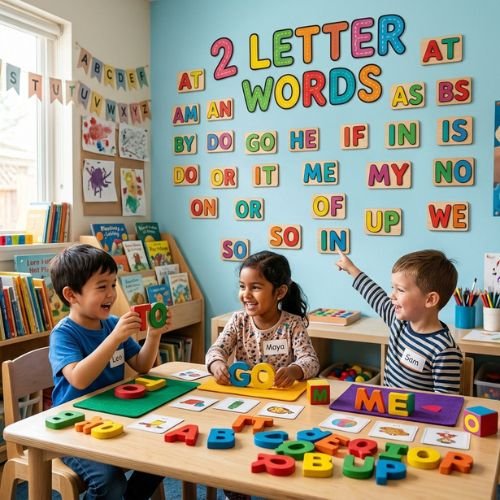
For children, learning common 2 letter words can be an important step in developing reading and writing skills. Short words are usually easier to recognize, pronounce, and remember. A child who understands common words such as am, an, at, do, go, he, if, in, is, it, me, my, no, on, to, and we can begin forming many simple sentences.
For example, the sentence “I am at home” uses two important 2 letter words. The sentence “We go to school” also shows how small words can help create a complete thought.
Practicing these words in sentences is often more helpful than memorizing them without context. When learners repeatedly see the same words while reading stories, they gradually become easier to recognize.
How to Use 2 Letter Words in Sentences
The best way to understand 2 letter words is to see them in context. The word am can be used in the sentence, “I am ready.” Here, it connects the subject with a description.
The word go can be used in a sentence such as, “We go to the park.” It describes movement from one place to another.
The word if introduces a condition. For example, “If it rains, we will stay home.” The sentence shows that one event depends on another possible event.
The word or helps present a choice, as in, “Would you like tea or coffee?” The word us can be used in the sentence, “Please help us.” These examples demonstrate that even the shortest words can have important roles in communication.
Rare and Unusual 2 Letter Words
The expanded list also includes several words that are uncommon in modern everyday English. Terms such as aa, ai, ae, ba, jo, ka, ki, qi, xi, xu, and za may not appear regularly in ordinary conversations, but they can be found in dictionaries, specialized vocabulary, cultural contexts, or word-game lexicons.
For example, qi refers to vital energy in Chinese philosophy, while xi is a letter of the Greek alphabet. Aa describes a type of rough lava, and za is an informal shortened form of pizza.
These unusual entries are particularly useful for people who enjoy expanding their vocabulary or playing word games. However, their acceptance can vary depending on the dictionary or official word list being used.
2 Letter Words in Word Games
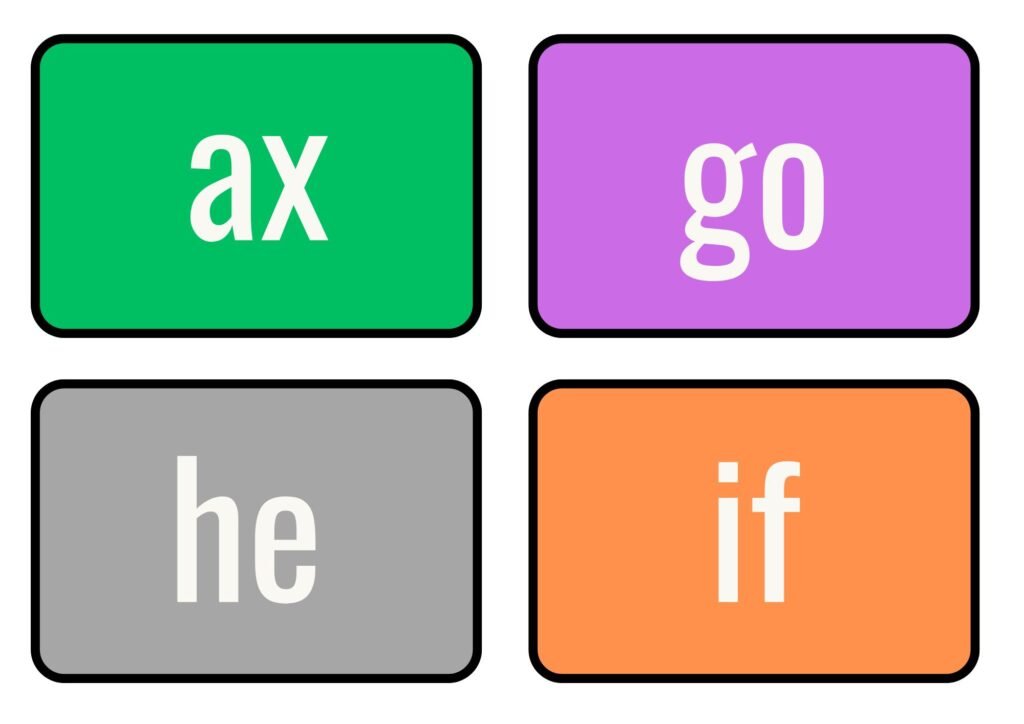
Two-letter words are especially valuable in word games because they can fit into small spaces and help connect longer words. Having a wide selection of short words gives players greater flexibility when arranging letters on the board.
Common words such as ax, ex, go, he, if, in, is, no, of, on, or, ox, and up can be useful in many situations. Less familiar words may also be accepted in certain official word-game dictionaries.
It is important to remember that different games can use different word lists. A word accepted in one game may not be accepted in another, so players should always check the official dictionary or rules of the specific game they are playing.
Why Are 2 Letter Words Important?
2 letter words are important because they form a foundation for reading and writing. Longer sentences often rely on short words to connect ideas and make their meaning clear. Without words such as of, in, on, to, by, and or, many sentences would sound incomplete or difficult to understand.
These words also help learners understand grammar. Pronouns such as he, me, us, and we show who is involved in an action. Verbs such as be, do, and go express states or actions. Prepositions and other connecting words help show time, place, direction, and relationships.
Learning short words can therefore make it easier to understand how English sentences are built.
Tips for Learning 2 Letter Words
One effective way to learn 2 letter words is to start with the most common ones. Learners can focus first on everyday words such as am, an, as, at, be, do, go, he, if, in, is, it, me, my, no, on, or, to, up, us, and we before moving on to rare or specialized entries.
Using the words in short sentences can also improve memory. Instead of simply reading the word in, learners can use it in a sentence such as, “The book is in the bag.” This helps connect spelling, meaning, and usage.
Reading beginner-friendly books is another useful method because common short words appear repeatedly. With regular practice, learners can recognize these words more quickly and naturally.
You May Also Like! 5 Letter Words That End With A
Frequently Asked Questions
What are 2 letter words?
2 letter words are words made up of exactly two letters. Examples include am, an, at, be, do, go, he, if, in, is, it, me, my, no, of, on, or, to, up, us, and we.
How many 2 letter words are there?
The total can vary depending on the dictionary or word list used. Common everyday English includes a limited group of familiar two-letter words, while larger dictionaries and word-game lists may include many additional rare, borrowed, archaic, and specialized terms.
What are the most common 2 letter words?
Some of the most common are am, an, as, at, be, by, do, go, he, if, in, is, it, me, my, no, of, on, or, so, to, up, us, and we.
Are all 2 letter combinations real words?
No. Most possible combinations of two letters do not form accepted words. Only certain combinations are recognized as words, expressions, abbreviations, symbols, or valid entries in particular dictionaries.
Are 2 letter words useful for children?
Yes. They are helpful for early reading, spelling, and sentence-building practice. Because many common 2 letter words appear repeatedly in basic English, learning them can improve reading confidence.
Are all the words in this list used in everyday English?
No. Some are common everyday words, while others are rare, archaic, cultural, scientific, or mainly found in specialized dictionaries and word-game word lists.
Are 2 letter words useful in word games?
Yes. Short words can be extremely useful in word games because they fit into limited spaces and can help connect or extend longer words. Players should check the official word list for their particular game because accepted words can vary.
Conclusion
2 letter words may be short, but they have a major role in the English language. Common words such as am, be, do, go, if, in, is, to, and we are essential for building clear and meaningful sentences. At the same time, the wider world of two-letter vocabulary includes rare, cultural, scientific, historical, and word-game terms that can help expand your knowledge of language.
Whether you are teaching children, learning English, improving your reading skills, or building a stronger vocabulary for word games, understanding 2 letter words is a useful starting point. By learning both common and unusual entries and practicing their meanings in context, you can gain a deeper appreciation for how much meaning even two small letters can carry.

2 Responses
[…] 2 Letter Words: Complete List of Two-Letter Words With Meanings […]
[…] words can add variety to motivational writing and help express positive ideas in a more distinctive […]