FFS Meaning in Text: What Does It Stand For in Chat?
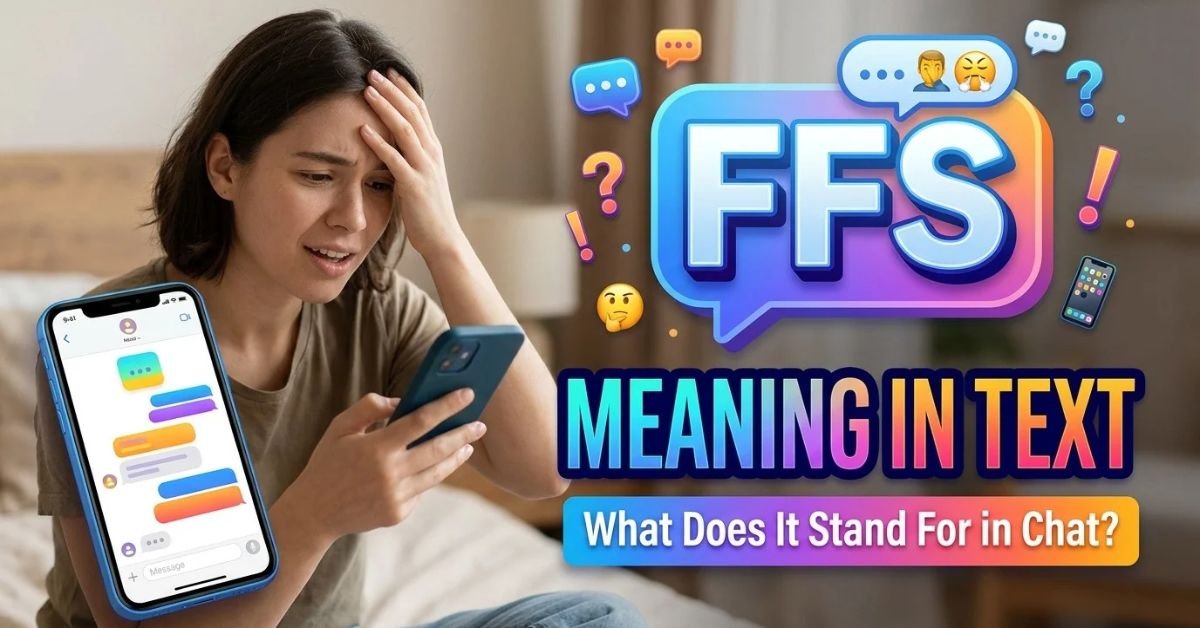
Have you ever received a text message that says “FFS!” and wondered what the person was trying to express? You might see this abbreviation in text messages, social media comments, online gaming chats, or conversations between friends. Although it consists of only three letters, it can communicate a strong feeling in just a moment.
FFS stands for “For F*’s Sake.”** It is an informal expression people use to show frustration, irritation, impatience, disbelief, or annoyance. The exact meaning depends on the conversation, the relationship between the people communicating, and the situation that prompted the message.
For example, if someone has been waiting for a friend for an hour and the friend still has not arrived, they might text, “FFS, where are you?” The abbreviation communicates that the person is getting frustrated with the delay.
However, FFS does not always indicate serious anger. Friends sometimes use it jokingly, while others use it to express genuine disappointment or exasperation.
In this guide, you will learn what FFS means in texting, how people use it in different situations, what its tone communicates, and how to respond when someone sends it to you.
What Does FFS Mean in Text?
In texting, FFS means “For F*’s Sake,” an expression of frustration, annoyance, impatience, or exasperation.**
It is a form of internet slang that allows people to communicate their emotions quickly without writing a complete sentence. Instead of saying, “I am becoming extremely frustrated with this situation,” someone might simply write, “FFS!”
The abbreviation is commonly used in casual digital communication, including:
- Text messages between friends and family.
- WhatsApp conversations.
- Social media posts and comments.
- Online gaming chats.
- Internet forums and discussion boards.
- Private messages on platforms such as Instagram, Discord, and Snapchat.
For example:
Person A: “I forgot to bring the tickets again.”
Person B: “FFS, we talked about this yesterday!”
In this conversation, Person B uses FFS to express frustration because the same problem has happened more than once.
The expression is usually informal and can sound rude because it contains profanity. For that reason, it is best suited to casual conversations with people who understand your communication style.
What Does FFS Stand For?
FFS is an abbreviation formed from the first letters of the phrase “For F***’s Sake.”
The phrase is an exclamation used to emphasize a reaction. People often say it when something goes wrong, someone makes an avoidable mistake, or a frustrating situation continues longer than expected.
Here is a simple breakdown:
- F stands for “For.”
- F stands for the profanity in the expression.
- S stands for “Sake.”
Although people sometimes write the complete phrase, the abbreviated form is convenient for quick online communication.
The phrase itself is not new, but FFS became particularly recognizable as internet users adopted short expressions for chats, forums, and social media.
Because it contains profanity, some people consider it offensive. Others use it so casually that they barely think about its literal meaning. How acceptable it sounds depends on the people involved and the setting in which it is used.
Why Do People Use FFS in Text Messages?
People use FFS because it communicates a strong reaction with very few characters. Rather than explaining every detail of their frustration, they can use the abbreviation to show how they feel immediately.
There are several common reasons someone might send it.
1. To Express Frustration
This is the most common use of FFS. People use it when something is annoying them or when a situation is not going as expected.
Example:
“I have restarted my laptop five times, and it still won’t work. FFS!”
The sender is frustrated because repeated attempts have not solved the problem.
2. To Show Impatience
FFS can communicate that someone has been waiting too long or feels that another person is taking too much time.
Example:
“FFS, the bus is late again!”
The person is expressing irritation about another delay.
3. To React to a Repeated Mistake
When the same problem occurs repeatedly, FFS can emphasize that the person has reached the limit of their patience.
Example:
“FFS, you keep forgetting to lock the door!”
Here, the sender is annoyed because the mistake has happened several times.
4. To Express Disbelief
Sometimes people use FFS when something seems ridiculous, unexpected, or difficult to believe.
Example:
“FFS, he actually sent that message to the entire group?”
In this situation, the abbreviation conveys a mixture of disbelief and frustration.
5. To Complain About an Unpleasant Situation
People may also use FFS to complain about everyday inconveniences.
Example:
“FFS, it started raining the second I left home.”
The sender is irritated by the unfortunate timing, although the situation itself may not be particularly serious.
6. To Be Dramatic or Funny
Among close friends, FFS can be used humorously to exaggerate a minor problem.
Example:
“FFS, my favorite snack is sold out again!”
The sender may not be genuinely angry. Instead, they are playfully expressing disappointment.
The important thing to remember is that FFS does not have exactly the same emotional meaning in every conversation. The surrounding words and the relationship between the people involved help determine its tone.
Different Meanings and Tones of FFS
Although FFS has one widely recognized meaning in everyday texting, it can communicate several different emotions.
Understanding these tones can help you interpret the message more accurately.
FFS as an Expression of Anger
When someone is genuinely angry, FFS can make their frustration more obvious.
For example:
“FFS, why did you lie to me?”
This message suggests that the sender is upset and may be confronting the other person about something serious.
FFS as an Expression of Annoyance
Sometimes the emotion is less intense than anger. The person may simply be irritated by a small inconvenience.
For example:
“FFS, I spilled coffee on my shirt.”
The sender is annoyed about an accident rather than angry with another person.
FFS as an Expression of Exhaustion
FFS can also suggest that someone is tired of dealing with a particular problem.
For example:
“FFS, I have explained this three times already.”
The sender may feel mentally exhausted because the situation keeps repeating itself.
FFS as a Joke Between Friends
In a friendly conversation, the abbreviation can be playful rather than hostile.
For example:
“FFS 😂 you ate the last slice of pizza!”
The laughing emoji suggests that the sender may be teasing the other person.
However, emojis do not guarantee that a message is harmless. If the relationship is tense or the behavior is genuinely upsetting, the same wording could communicate real frustration.
FFS as a Sign of Disappointment
Someone might use FFS when an event does not meet their expectations.
For example:
“FFS, I studied all night and the exam was completely different.”
The sender is expressing disappointment and frustration about the unexpected exam.
In short, the emotional meaning of FFS depends on context. It can range from mild irritation to strong anger, and sometimes it is simply an exaggerated reaction to something unimportant.
How to Use FFS in a Sentence

FFS can appear at the beginning, middle, or end of a sentence. It can also stand alone as a complete reaction.
Here are some common patterns.
At the beginning of a sentence:
“FFS, why is the internet so slow today?”
This places the frustration at the front of the message.
At the end of a sentence:
“The printer stopped working again, FFS.”
This adds an expression of irritation after explaining the problem.
As a standalone message:
“FFS!”
This can communicate immediate frustration without any additional explanation.
In a joking conversation:
“FFS, you beat me at this game again 😂”
This may be a playful reaction between friends.
In a complaint:
“FFS, I have been waiting here for 40 minutes.”
This emphasizes impatience about a delay.
Although these examples illustrate common uses, FFS is not appropriate for every situation. It can sound aggressive when directed at someone, particularly if the message also contains accusations or insults.
Examples of FFS in Everyday Texting
The easiest way to understand FFS is to see how it works in realistic conversations. The following examples illustrate different situations and emotional tones.
Example 1: When Someone Is Late
Alex: “Are you coming?”
Sam: “Yeah, I’ll be there soon.”
Alex: “FFS, you’ve said that three times already.”
Meaning: Alex is frustrated because Sam keeps delaying their arrival.
Example 2: When Technology Stops Working
Mia: “My phone froze again.”
Liam: “FFS, didn’t you just get it repaired?”
Meaning: Liam is expressing annoyance and surprise that the problem has returned.
Example 3: When Someone Makes a Small Mistake
A: “I forgot my headphones at home.”
B: “FFS 😂 how do you forget them every single day?”
Meaning: B is probably teasing A about a repeated habit.
Example 4: When Plans Get Cancelled
A: “The concert has been cancelled.”
B: “FFS, I was looking forward to it all week.”
Meaning: B is disappointed and frustrated because the event will no longer happen.
Example 5: When a Person Is Overwhelmed
A: “I have another assignment due tomorrow.”
B: “FFS, don’t you already have three?”
Meaning: B is reacting with disbelief and frustration about the workload.
Example 6: During Online Gaming
Player 1: “We lost because the connection dropped.”
Player 2: “FFS, we were about to win!”
Meaning: Player 2 is frustrated because a technical issue ruined the game.
Example 7: When Someone Repeats a Question
A: “What time are we meeting?”
B: “I told you it’s at six.”
A: “Sorry, I forgot.”
B: “FFS, please check the group chat.”
Meaning: B is irritated because the information has already been provided.
Example 8: When Something Goes Wrong at Work
Coworker 1: “The file didn’t save.”
Coworker 2: “FFS, we just spent an hour editing it.”
Meaning: Coworker 2 is frustrated about losing the work.
This example illustrates how the abbreviation might appear in an informal conversation between colleagues. It would generally be less appropriate in a formal email or a message to a senior manager.
Example 9: When Someone Is Disappointed in Themselves
A: “I left my wallet at home.”
B: “Seriously?”
A: “FFS, I do this all the time.”
Meaning: The sender is annoyed with their own repeated mistake.
Example 10: When the Weather Ruins Plans
A: “Ready for our picnic?”
B: “FFS, it’s pouring outside now.”
Meaning: B is frustrated because the weather has disrupted the plans.
Across all these examples, the basic meaning remains the same, but the intensity changes according to the situation.
Also Read! What Does IKTR Mean in Text? Definition, Examples & Usage
What Does FFS Mean on WhatsApp?
On WhatsApp, FFS usually means “For F***’s Sake.” People use it in private messages, family groups, and friend circles to express irritation or impatience.
For example:
Friend 1: “You forgot to bring the book again?”
Friend 2: “FFS, I left it on my desk!”
In this example, the sender is frustrated with their own mistake.
FFS can also appear in WhatsApp group chats when conversations become repetitive or plans change unexpectedly.
For example:
“FFS, can everyone decide where we’re going?”
The sender is showing impatience because the group has not reached a decision.
However, the meaning depends on the relationship. Close friends might use FFS without intending to offend anyone, while someone unfamiliar with the expression might interpret it as aggressive or disrespectful.
What Does FFS Mean on Snapchat?
On Snapchat, FFS has the same common meaning as in other messaging apps: “For F***’s Sake.”
People may use it in direct messages, replies to stories, or conversations with friends.
For example:
“FFS, I sent that snap to the wrong person!”
This message expresses embarrassment and frustration about an accidental mistake.
Another example is:
“FFS, why is my streak about to disappear?”
Here, the person is annoyed about potentially losing a Snapchat streak.
Because Snapchat conversations are often casual and spontaneous, FFS can appear as a quick emotional reaction rather than part of a carefully written sentence.
Still, it is not automatically friendly or harmless. If someone sends FFS during an argument, it may communicate genuine anger.
What Does FFS Mean on Instagram?
On Instagram, FFS is commonly used in comments, direct messages, and reactions to posts.
Someone might use it when responding to an irritating situation, criticizing an event, or joking with a friend.
For example:
“FFS, another update changed the whole layout.”
This expresses frustration with a change to an app.
Someone might also comment:
“FFS, why would anyone do that?”
Depending on the post, the comment could communicate disbelief, criticism, or annoyance.
On social media, context is particularly important because readers may not know the person who wrote the comment. An expression intended as a joke between friends may appear rude or hostile to everyone else.
What Does FFS Mean in Gaming?
FFS is also used in online gaming conversations, where players often communicate quickly during competitive matches.
Players may use it when they lose unexpectedly, encounter technical problems, make mistakes, or become frustrated with teammates.
Consider this example:
Player 1: “We were winning until the server disconnected.”
Player 2: “FFS, that was our best match!”
The second player is expressing frustration because the technical problem interrupted the game.
Here is another example:
“FFS, watch out for the enemy behind you!”
In this situation, the player may be urgently warning a teammate while expressing irritation.
Gaming conversations often involve strong emotional reactions, so FFS can sound more intense than it would in an ordinary conversation. Nevertheless, it does not always mean that a player is angry at another person.
Is FFS a Rude Word?
Yes, FFS is generally considered vulgar or potentially offensive because it abbreviates a phrase containing the F-word.
However, whether it sounds genuinely rude depends on how it is used.
For example, sending “FFS!” after accidentally dropping your phone is different from telling someone, “FFS, you’re so annoying.”
In the first example, the frustration is directed at a situation. In the second, the message may feel like a personal attack.
Here are some factors that influence how rude FFS sounds:
- Your relationship: Close friends may be comfortable using profanity with one another.
- The situation: A minor inconvenience may make the expression seem dramatic, while a serious disagreement can make it sound hostile.
- The wording: A message directed at another person may feel more confrontational than one about an everyday problem.
- The platform: Informal chats generally allow more slang than professional emails or official communications.
- The recipient’s preferences: Some people are comfortable with profanity, while others consider it disrespectful.
If you are unsure whether someone is comfortable with this language, it is better to avoid using FFS around them.
Is FFS Appropriate at Work?
In most professional settings, it is better to avoid FFS, particularly in emails, formal messages, customer communications, and conversations with clients.
Although some colleagues use informal slang with one another, FFS can make a message appear unprofessional or unnecessarily aggressive.
Consider these two examples.
Informal version:
“FFS, the report is late again.”
Professional version:
“The report is delayed again. Could we review the reasons for the delay and agree on a revised deadline?”
Both messages communicate dissatisfaction, but the second is more constructive and appropriate for most workplaces.
Similarly, instead of writing:
“FFS, the system isn’t working.”
You could write:
“The system appears to be experiencing another issue. Could someone please investigate?”
The professional alternatives communicate the problem without introducing unnecessary tension.
If you are messaging a close colleague in a private conversation, the abbreviation might be acceptable depending on your workplace culture. However, when communicating with clients, supervisors, or unfamiliar colleagues, choosing more neutral language is generally safer.
Also Read! ALR Meaning in Text: Definition, Uses, and Examples
How Should You Reply When Someone Texts FFS?
Your response should depend on the situation and whether the person appears genuinely upset or is simply joking.
You do not need to assume that every message containing FFS is an attack. At the same time, you should not ignore obvious signs of frustration.
Here are several ways to respond.
1. When Someone Is Frustrated With a Situation
If the person is complaining about something that went wrong, acknowledge the problem.
Their message: “FFS, the train is delayed again.”
Your response: “I know, that’s really frustrating. Hopefully, it won’t be much longer.”
This response shows understanding without escalating the frustration.
2. When Someone Is Annoyed With You
If the person is upset because you made a mistake, acknowledge it and address the issue.
Their message: “FFS, you forgot to call me again.”
Your response: “You’re right, I should have called. I’m sorry about that.”
Taking responsibility can be more helpful than arguing about their choice of words.
3. When a Friend Is Joking
If you know the person is teasing you, a playful response may be appropriate.
Their message: “FFS 😂 you lost again!”
Your response: “Just wait until the next round 😂”
This keeps the conversation lighthearted.
4. When You Do Not Understand Their Message
If you are unfamiliar with the abbreviation, it is perfectly reasonable to ask what they mean.
Their message: “FFS, not again.”
Your response: “What happened?”
You do not necessarily need to ask for the definition if the situation makes the meaning clear. Asking what happened can help you understand the emotion behind the message.
5. When Someone Sounds Disrespectful
If the person repeatedly directs aggressive language at you, you can respond calmly and establish a boundary.
Their message: “FFS, can’t you do anything right?”
Your response: “I understand that you’re frustrated, but please talk to me respectfully.”
This acknowledges the emotion without accepting insulting behavior.
The best response is usually the one that addresses the underlying issue rather than focusing exclusively on the abbreviation.
What Are Some Polite Alternatives to FFS?
If you want to express frustration without using profanity, several alternatives can communicate a similar feeling.
| Alternative | Meaning or tone | Example |
|---|---|---|
| Seriously? | Disbelief or mild annoyance | “Seriously? It happened again?” |
| Come on! | Impatience or frustration | “Come on! We’re already late.” |
| Oh, no! | Disappointment or concern | “Oh, no! I forgot my keys.” |
| Good grief! | Exasperation | “Good grief, that’s the third time.” |
| For goodness’ sake! | Frustration without strong profanity | “For goodness’ sake, please listen.” |
| Are you kidding me? | Surprise or disbelief | “Are you kidding me? The shop is closed?” |
| This is so frustrating. | Clear expression of irritation | “This is so frustrating. The website keeps crashing.” |
| I can’t believe this. | Disbelief or disappointment | “I can’t believe this. The meeting was cancelled.” |
| Give me a break. | Exasperation or disbelief | “Give me a break. We just fixed that problem.” |
| Oh, come on! | Mild to moderate irritation | “Oh, come on! We were almost finished.” |
These expressions are not perfect substitutes in every situation. Some can still sound impatient or confrontational, but they generally avoid the profanity associated with FFS.
What Is the Difference Between FFS and FML?
FFS and FML are both common internet abbreviations, but they express different reactions.
FFS stands for “For F***’s Sake.” It usually expresses frustration, annoyance, impatience, or exasperation with a situation.
Example:
“FFS, the internet stopped working again.”
The person is irritated because the internet has stopped working.
FML stands for “F*** My Life.” It is commonly used to express frustration, embarrassment, disappointment, or the feeling that everything is going wrong.
Example:
“I missed the bus, forgot my lunch, and spilled coffee on my shirt. FML.”
The person is expressing frustration about a series of unfortunate events.
The main difference is that FFS often reacts to a specific problem, person, or situation, while FML often expresses a broader feeling of personal misfortune.
Both expressions contain profanity and are generally best reserved for informal conversations.
What Is the Difference Between FFS and WTF?
FFS and WTF are similar because both can communicate strong emotions, but their usual emphasis differs.
WTF stands for “What the F***?” and commonly expresses surprise, confusion, shock, or disbelief.
For example:
“WTF, why is my computer making that noise?”
The sender is surprised or confused by the unusual sound.
FFS, on the other hand, usually emphasizes frustration or impatience.
For example:
“FFS, why does my computer keep making that noise?”
The sender sounds annoyed because the problem is recurring or inconvenient.
These meanings can overlap. Someone might use either expression when something unexpected happens, and the surrounding conversation determines which emotion is strongest.
Does FFS Have Any Other Meanings?
Yes. Although “For F***’s Sake” is the most common interpretation in casual texting, FFS can stand for other things in specialized contexts.
Three examples are:
1. Facial feminization surgery
In medical and gender-related discussions, FFS can refer to facial feminization surgery, a group of procedures intended to modify facial features toward a more traditionally feminine appearance.
For example:
“She is researching surgeons who perform FFS.”
Here, the medical context makes the meaning clear.
2. Fee-for-service
In healthcare, insurance, and business, FFS can refer to a fee-for-service payment model, in which services are billed individually.
For example:
“The provider uses an FFS payment arrangement.”
This is a professional term rather than an expression of frustration.
3. Fast File System
In computing discussions, FFS can refer to the Fast File System, a filesystem associated with BSD Unix systems.
For example:
“The documentation explains how FFS organizes data on disk.”
Again, the technical context distinguishes this meaning from texting slang.
These alternative meanings are less likely to be intended in an ordinary conversation between friends. When you encounter FFS, look at the subject of the discussion before deciding what the abbreviation means.
Common Mistakes People Make When Understanding FFS
Although FFS is relatively simple, people can misinterpret it when they overlook the context.
Mistake 1: Assuming the Sender Is Extremely Angry
FFS can express irritation without indicating serious anger.
For example, “FFS, I forgot my coffee” might simply be an exaggerated reaction to a small inconvenience.
Consider the rest of the conversation before assuming the sender is furious.
Mistake 2: Assuming It Is Always a Joke
The opposite mistake is assuming that FFS is harmless because friends frequently use it casually.
If someone writes, “FFS, stop contacting me,” the message may communicate genuine frustration and a clear request for space.
Take the wording and situation seriously.
Mistake 3: Using It in Formal Communication
FFS may be understood in professional environments, but that does not make it appropriate in every workplace.
A neutral expression is generally better when communicating with customers, managers, teachers, or people you do not know well.
Mistake 4: Confusing Slang With Professional Acronyms
If FFS appears in a medical report, technical document, or insurance discussion, it may have a specialized meaning.
Do not automatically interpret every occurrence as internet slang.
Mistake 5: Ignoring the Relationship Between the Speakers
The same expression can sound playful between close friends and insulting between people who are arguing.
The relationship, the message history, and the surrounding words can all help clarify the intended meaning.
Frequently Asked Questions About FFS Meaning in Text
1. What does FFS mean in simple words?
FFS stands for “For F***’s Sake.” In simple terms, it is an informal expression people use when they feel annoyed, frustrated, impatient, or exasperated.
2. What does FFS mean from a girl?
When a girl texts FFS, it usually has the same meaning as when anyone else uses it: “For F***’s Sake.”
She might be expressing frustration, disappointment, disbelief, or playful annoyance. The abbreviation alone does not reveal whether she is angry with you. Read the surrounding message to understand the situation.
3. What does FFS mean from a guy?
When a guy sends FFS, it generally communicates frustration, impatience, irritation, or exasperation.
For example, “FFS, I missed the bus” indicates annoyance about the situation. It does not necessarily mean that he is angry with the person reading the message.
4. Is FFS a bad word?
FFS is considered vulgar because it abbreviates a phrase containing the F-word. Although it is common in casual online communication, it may be considered offensive or inappropriate in formal situations.
5. Does FFS mean someone is angry at me?
Not necessarily. The person may be frustrated with a situation, an event, another person, or even themselves.
For example, “FFS, my phone died” does not suggest anger toward the recipient. However, “FFS, why did you lie to me?” more directly expresses frustration with another person.
6. Can FFS be used jokingly?
Yes. Friends sometimes use FFS to exaggerate their reaction to a minor problem.
For example, “FFS, you stole my fries again 😂” might be playful teasing.
However, humor depends on the relationship and context, so the abbreviation is not automatically a joke.
7. What does lowercase ffs mean?
Lowercase ffs has the same meaning as uppercase FFS. Both usually stand for “For F***’s Sake.”
Capitalization may affect how emphatic a message appears, but it does not fundamentally change the abbreviation’s meaning.
8. What does FFS mean at the end of a sentence?
At the end of a sentence, FFS generally adds emphasis to an expression of frustration or impatience.
For example, “You forgot the appointment again, ffs” communicates irritation about the repeated mistake.
9. What does FFS mean in a relationship?
In a relationship, FFS can communicate irritation, disappointment, impatience, or playful frustration.
For example, “FFS, you always make me laugh when I’m trying to be serious” might be affectionate teasing. In contrast, “FFS, stop ignoring what I’m saying” suggests a more serious disagreement.
The complete message and the relationship’s circumstances are more informative than the abbreviation alone.
10. Is FFS the same as OMG?
No. OMG stands for “Oh My God” and can express surprise, excitement, happiness, or shock. FFS generally emphasizes frustration, impatience, or exasperation.
For example, “OMG, we won!” expresses excitement, while “FFS, we lost again” communicates frustration.
11. What should I reply to FFS?
Your response depends on what caused the frustration.
You could acknowledge the problem by saying, “I know, that’s frustrating,” apologize if you made a mistake, or ask, “What happened?” if you are unsure.
If the message is directed at you in a disrespectful way, you can calmly ask the person to speak more respectfully.
12. Is FFS appropriate for texting someone you like?
It depends on your relationship and how you normally communicate. If both people are comfortable with casual profanity, FFS might appear in a playful conversation.
However, using it during a sensitive discussion can make your message sound dismissive or aggressive. When you are unsure, choose a clearer and more considerate expression.
13. What is the difference between FFS and SMH?
SMH stands for “Shaking My Head.” It generally communicates disappointment, disapproval, or disbelief.
FFS expresses frustration or exasperation more directly and contains profanity in its full form.
For example, “SMH, he forgot again” sounds disappointed, while “FFS, he forgot again” sounds more openly irritated.
14. Can FFS mean something other than slang?
Yes. Depending on the context, FFS can refer to facial feminization surgery, fee-for-service, or Fast File System, among other specialized meanings.
In ordinary texting, however, “For F***’s Sake” is the most likely interpretation.
Final Thoughts
FFS is a short but expressive abbreviation that appears in everyday text messages, social media conversations, group chats, and online gaming. Its most common meaning is “For F*’s Sake,” an informal expression of frustration, annoyance, impatience, or exasperation.**
The important thing is to understand the context rather than interpreting the letters in isolation. Someone might use FFS to complain about a broken phone, react to a repeated mistake, tease a close friend, or express genuine anger during an argument.
If you receive FFS in a message, consider the surrounding words, the situation, and your relationship with the sender before deciding how to respond.
And if you plan to use it yourself, remember that it contains profanity. It may fit naturally into a casual conversation with friends, but a polite alternative is usually a better choice in professional or sensitive situations.


1 Response
[…] Also Read! FFS Meaning in Text: What Does It Stand For in Chat? […]