What Does AQI Mean? A Simple Guide to Understanding Air Quality
Have you ever stepped outside and noticed that the air feels dusty, smoky, or unusually heavy? Sometimes, the sky looks perfectly clear, yet the air may still contain pollutants that are harmful to your health. This is where the Air Quality Index, commonly known as AQI, becomes useful.
AQI is a simple way to understand the condition of the air around you. It turns complex air pollution measurements into numbers and categories that help people recognize when outdoor air is clean and when extra precautions may be necessary.
Whether you check the weather before going for a walk, plan outdoor exercise, or simply want to protect your family from pollution, understanding AQI can help you make better decisions. This guide explains the meaning of AQI, how its scale works, what affects air quality, and how you can use daily readings to reduce your exposure to pollution.
What Is the Meaning of AQI?
AQI stands for Air Quality Index. It is a measurement-based indicator used to communicate the level of air pollution and its possible effects on human health.
Instead of asking people to understand complicated measurements of dust, smoke, and gases, the AQI system presents air quality in a more accessible format. A single number can provide a quick overview of pollution conditions, while colors and labels make the result easier to interpret.
For example, a low AQI reading usually suggests that the air is relatively clean. A high reading indicates that pollution levels may be more concerning and that people should consider limiting their exposure.
The AQI is particularly helpful because air pollution can change throughout the day. Traffic, industrial activity, weather conditions, and seasonal burning can all affect the air people breathe.
However, AQI values must be interpreted according to the system used by the reporting authority. Different countries may calculate and classify air quality differently.
Why Should You Pay Attention to AQI?
Air quality is closely connected to everyday life. People breathe continuously, but they cannot always see or smell the pollutants present in the atmosphere. An AQI report provides useful information that visual observation alone cannot offer.
Here are several reasons why checking AQI can be worthwhile.
It helps you plan your day. When pollution levels rise, you can consider changing the timing of outdoor activities or exercising indoors.
It supports healthier choices. People can use air quality information to reduce unnecessary exposure during periods of heavy pollution.
It helps protect sensitive individuals. Children, older adults, and people with asthma or heart and lung conditions may need additional precautions when air quality deteriorates.
It increases environmental awareness. Regular AQI reports help people understand how traffic, smoke, industrial emissions, and weather can influence the air in their communities.
It provides an early warning. During severe pollution episodes, AQI information can alert residents that the air may require special attention, even before symptoms appear.
AQI is not intended to create unnecessary fear. Its purpose is to make air pollution information easier to understand so people can respond appropriately.
Understanding AQI Levels and Their Meaning
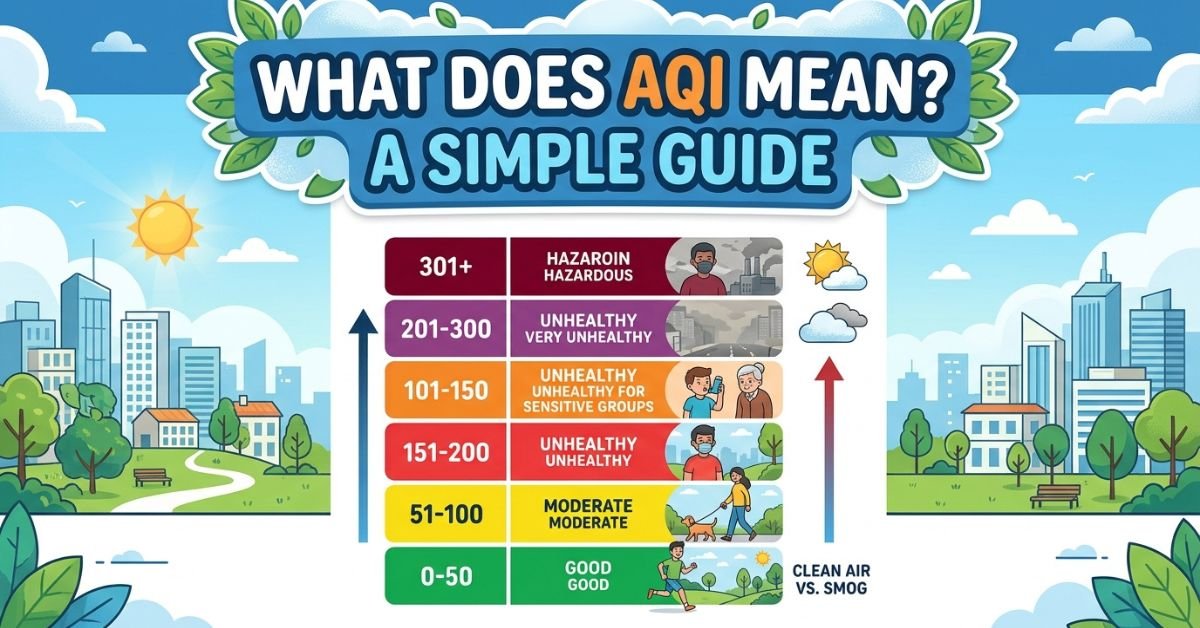
An AQI reading becomes more useful when you know how to interpret it. One widely recognized example is the United States Air Quality Index, which divides readings into six categories.
| AQI reading | Air quality category | General interpretation |
|---|---|---|
| 0–50 | Good | Air quality is generally satisfactory. |
| 51–100 | Moderate | Conditions are generally acceptable, although some sensitive people may be affected. |
| 101–150 | Unhealthy for Sensitive Groups | People who are more vulnerable to pollution may experience health effects. |
| 151–200 | Unhealthy | Pollution may affect a wider range of people. |
| 201–300 | Very Unhealthy | Health concerns increase, making exposure reduction important. |
| 301–500 | Hazardous | Pollution presents a serious health concern. |
These ranges apply to the U.S. AQI system. Your country or local monitoring service may use a different scale, so always check the accompanying category.
What Do AQI Colors Tell You?
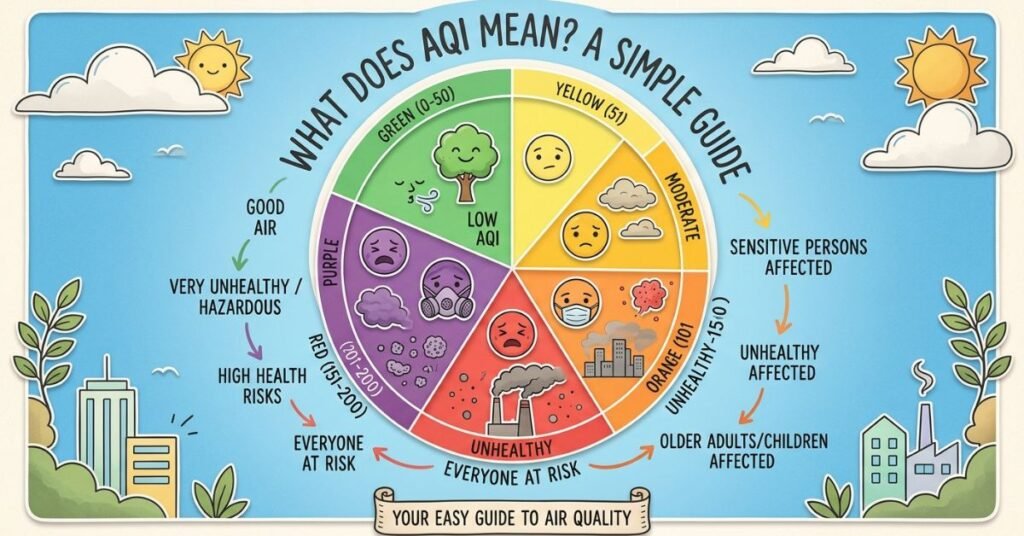
Many air quality services use colors to communicate pollution levels quickly.
Green: Air quality is good, and ordinary outdoor activities are generally suitable.
Yellow: Conditions are moderate. Most people can continue their usual routines, but unusually sensitive individuals should pay attention to how they feel.
Orange: Sensitive groups may experience health effects. Reducing prolonged or intense outdoor activity may be appropriate.
Red: Air quality is unhealthy. More people may be affected, and reducing outdoor exposure becomes increasingly important.
Purple: Pollution levels are very unhealthy, and additional precautions are recommended.
Maroon: The U.S. AQI uses this color for hazardous conditions, when serious health risks are a concern.
Colors are useful for quick decisions, but they should always be interpreted alongside the actual AQI value and local health recommendations.
How Does the AQI System Work?
The AQI is created from air pollution measurements collected by monitoring stations and other approved measurement systems.
These systems measure the concentration of specific pollutants in the atmosphere. Environmental agencies then apply their official calculation methods to convert the measurements into index values.
In the U.S. AQI system, individual pollutants can each produce an AQI value. The highest pollutant-specific index generally determines the reported overall AQI.
This approach helps identify the pollutant presenting the greatest immediate concern under the index’s calculation method.
For example, one location might have an elevated AQI because of fine particles in smoke, while another might experience poor air quality because of ground-level ozone.
AQI is therefore not a percentage, and an AQI of 150 does not mean the air contains 150 percent pollution. It is an index used to communicate pollution-related health concerns.
Which Pollutants Can Influence AQI?
Air pollution consists of different particles and gases. The pollutants that influence an AQI reading depend on the local monitoring system.
Fine Particles (PM2.5)
PM2.5 describes tiny airborne particles measuring 2.5 micrometers or less in diameter. These particles can reach deep into the lungs, and some components may enter the bloodstream.
They can come from vehicle emissions, fuel combustion, industrial processes, smoke, and the burning of agricultural waste.
Fine particles are especially concerning during smog episodes because their small size makes them easy to inhale.
Larger Airborne Particles (PM10)
PM10 includes particles measuring 10 micrometers or less in diameter. Sources include construction dust, road dust, pollen, and various industrial activities.
Exposure to elevated PM10 concentrations can irritate the respiratory system, particularly in people who are sensitive to airborne particles.
Ground-Level Ozone
Ground-level ozone is a gas formed through chemical reactions involving other pollutants in the presence of sunlight.
It is not the same as the ozone layer that protects Earth from much of the sun’s harmful ultraviolet radiation.
Ground-level ozone can irritate the lungs and make breathing uncomfortable. Concentrations can become elevated during sunny weather, depending on local pollution and atmospheric conditions.
Nitrogen Dioxide
Nitrogen dioxide is commonly associated with fuel combustion, including emissions from vehicles and industrial sources.
High concentrations can irritate the airways. This gas also contributes to atmospheric reactions that produce other pollutants.
Sulfur Dioxide
Sulfur dioxide can be released when sulfur-containing fuels are burned and through certain industrial processes.
It can irritate the respiratory system, and people with asthma may be particularly sensitive to exposure.
Carbon Monoxide
Carbon monoxide is a colorless, odorless gas produced by incomplete combustion.
At dangerous concentrations, it interferes with the body’s ability to transport oxygen. Although carbon monoxide is included in the U.S. AQI framework, a routine AQI reading should not be treated as a substitute for a carbon monoxide detector or an emergency warning system.
Not all countries include or calculate these pollutants identically in their AQI systems.
What Is Considered a Good AQI?
Under the U.S. AQI scale, readings from 0 to 50 fall into the good category.
This generally means that air pollution is expected to pose little risk to most people under the conditions represented by the reading.
Readings between 51 and 100 are considered moderate. Most people can usually continue normal activities, although unusually sensitive individuals may need to be more cautious.
Once the AQI exceeds 100, concerns become greater for sensitive groups. Higher readings indicate increasingly unhealthy conditions and may justify reducing the duration or intensity of outdoor activities.
It is important to remember that a good AQI does not guarantee completely pollution-free air. The index covers particular pollutants and averaging periods, and conditions can vary between monitoring stations.
When Does AQI Become Unhealthy?
An unhealthy AQI indicates that pollution levels may pose a meaningful risk to health.
In the U.S. system, readings from 151 to 200 are classified as unhealthy. At this level, members of the general public may begin to experience health effects, while sensitive individuals can face greater risks.
Readings from 201 to 300 are classified as very unhealthy, and values above 300 fall into the hazardous category.
When air quality reaches these levels, consider reducing outdoor exertion, spending time in cleaner indoor air, and following public health advice.
If you have asthma or another existing medical condition, follow your clinician’s recommendations and prescribed treatment plan. Seek urgent medical attention for severe breathing difficulty or chest pain.
There is no single AQI threshold that has exactly the same meaning across every country’s system, so check the scale used by your local authority.
How Can Poor AQI Affect Your Health?
The effects of polluted air depend on the pollutants involved, their concentrations, the length of exposure, and a person’s health.
Short-term exposure may cause symptoms such as coughing, throat irritation, watery eyes, wheezing, or difficulty breathing. Pollution can also aggravate existing respiratory and cardiovascular conditions.
Long-term exposure to air pollution is associated with increased risks of serious health problems, including heart and lung disease.
Some groups may need extra protection:
- Children: Their lungs are developing, and they often participate in outdoor activities.
- Older adults: They may be more vulnerable, particularly if they have existing health conditions.
- People with asthma: Pollution can trigger symptoms or worsen breathing difficulties.
- People with heart or lung conditions: Poor air quality may aggravate their medical problems.
- Outdoor workers: Spending many hours outside can increase their cumulative exposure to pollutants.
Healthy people are not completely immune to air pollution. That is why air quality information can be useful for everyone, even when they do not immediately notice any symptoms.
Also Read! What Does YOLO Mean? Definition, Origin, and Examples
How to Check AQI Before Going Outside
Checking the AQI takes only a few moments and can help you plan outdoor activities more carefully.
Start by opening a reliable weather application or an air quality monitoring website. Search for your city and locate the current AQI reading.
Next, check the category associated with the number. If the service provides pollutant information, look at whether particulate matter, ozone, or another pollutant is driving the reading.
Pay attention to the timestamp as well. Air quality can change quickly, so an outdated reading may not accurately describe current conditions.
For better results, use information from an official environmental agency or a monitoring service that clearly explains its data sources. Remember that air quality can vary from one neighborhood to another, especially near busy roads and industrial areas.
Practical Ways to Reduce Exposure to Air Pollution
You may not be able to control outdoor pollution, but there are several ways to reduce how much of it you breathe.
Adjust Outdoor Exercise
When air quality becomes unhealthy, consider exercising indoors or choosing a less strenuous activity. Intense exercise increases your breathing rate and may increase the amount of pollution you inhale.
Improve Indoor Air Quality
During periods of heavy outdoor pollution, keeping windows closed may help reduce the entry of polluted air, provided that indoor temperatures remain safe and ventilation needs are considered.
A properly sized air purifier with an effective HEPA filter can reduce airborne particles in the room where it operates. Avoid indoor smoking and unnecessary burning, which can introduce additional pollutants.
Use a Suitable Respirator When Needed
A well-fitting N95 or equivalent certified particulate respirator can reduce exposure to airborne particles when worn correctly.
However, particulate respirators do not protect against every harmful gas. Ordinary cloth masks and loose-fitting face coverings generally offer less protection against fine particles.
Follow Local Advisories
During severe smog, wildfire smoke, or other pollution events, follow guidance from local environmental and health authorities.
People with existing respiratory or heart conditions should take particular care and follow their healthcare professional’s recommendations.
Monitor Changes Throughout the Day
Do not assume that air quality will always be better in the morning or evening. Pollution patterns differ by location, season, and pollutant.
Checking an hourly forecast can help you identify a more suitable time for outdoor activities.
What Causes AQI to Rise?
AQI increases when pollutant concentrations become high enough to affect the index. Several factors can contribute to this change.
Vehicle exhaust releases pollutants into busy urban areas. Industrial activity and fuel combustion can add gases and particles to the atmosphere. Construction work and unpaved roads contribute dust, while the burning of agricultural residues and other materials can increase smoke and fine particle levels.
Weather also matters. Weak winds and atmospheric inversions can trap pollution close to the ground. Strong sunlight can encourage the formation of ground-level ozone, while some weather systems can disperse or remove certain pollutants.
Seasonal patterns vary by region. Some places experience severe winter smog, while others face higher ozone levels during warmer months.
Understanding these causes helps explain why AQI readings can change even when a city has not experienced a major new pollution event.
AQI and Air Pollution: Are They the Same?
AQI and air pollution are closely related, but they describe different things.
Air pollution refers to harmful particles and gases present in the atmosphere. AQI is a system that translates measurements of selected pollutants into an index designed to communicate possible health risks.
For example, PM2.5 is a type of pollutant, while the AQI is a numerical indicator that may be calculated using the measured concentration of PM2.5.
This distinction matters because the AQI offers a simplified overview. It is useful for everyday decisions, but it does not provide every detail about the composition of the air or every possible health effect.
For a complete understanding of local air quality, consider both the AQI category and the underlying pollutant measurements when they are available.
Also Read! DBQ Meaning: What Does DBQ Stand For and How Is It Used?
Frequently Asked Questions
What does AQI stand for?
AQI stands for Air Quality Index. It communicates the condition of the air and its potential health implications through a numerical scale and, in many systems, color-coded categories.
Is a lower AQI better?
Generally, yes. A lower reading usually indicates cleaner air and a lower expected risk from the pollutants represented by the index.
What AQI is considered good?
Under the U.S. AQI system, a reading from 0 to 50 is classified as good. Other countries may use different categories and numerical ranges.
Is an AQI of 100 safe?
An AQI of 100 is at the upper end of the moderate category in the U.S. system. Conditions are generally acceptable for most people, but unusually sensitive individuals may experience effects.
What does an AQI of 150 mean?
An AQI of 150 falls at the upper boundary of the unhealthy-for-sensitive-groups category in the U.S. system. Sensitive individuals should consider reducing prolonged or intense outdoor exertion.
Can AQI change within a few hours?
Yes. Changes in traffic, wind, sunlight, emissions, and other atmospheric conditions can cause air quality readings to rise or fall throughout the day.
Can air pollution be present when the sky looks clear?
Yes. Many harmful pollutants cannot be seen with the naked eye. Fine particles and certain gases may be present even when the sky appears clear.
Is AQI calculated the same way everywhere?
No. Different countries may use different calculation methods, pollutant thresholds, and categories. Check your local monitoring authority to understand the scale used in your area.
How often should I check AQI?
Check it before outdoor activities when pollution is a concern, especially during smog episodes, wildfire events, or periods of poor air quality. People who are sensitive to pollution may benefit from checking more frequently.
Final Thoughts
Understanding AQI makes it easier to recognize when the air around you may affect your health. The Air Quality Index converts complex pollution measurements into information that people can use when planning their daily activities.
A lower reading generally indicates better air quality, while a higher reading signals a greater need to pay attention to pollution and take appropriate precautions.
By checking reliable AQI reports, understanding the categories, and following local health advice, you can make more informed decisions about exercise, outdoor work, and time spent outside.
The most important takeaway is simple: Do not rely only on how the sky looks or how the air smells. Check the AQI, understand what the reading means in your local system, and use that information to make sensible choices for your health.