NWOT Meaning: What Does NWOT Stand For? A Complete Guide
Key Takeaways
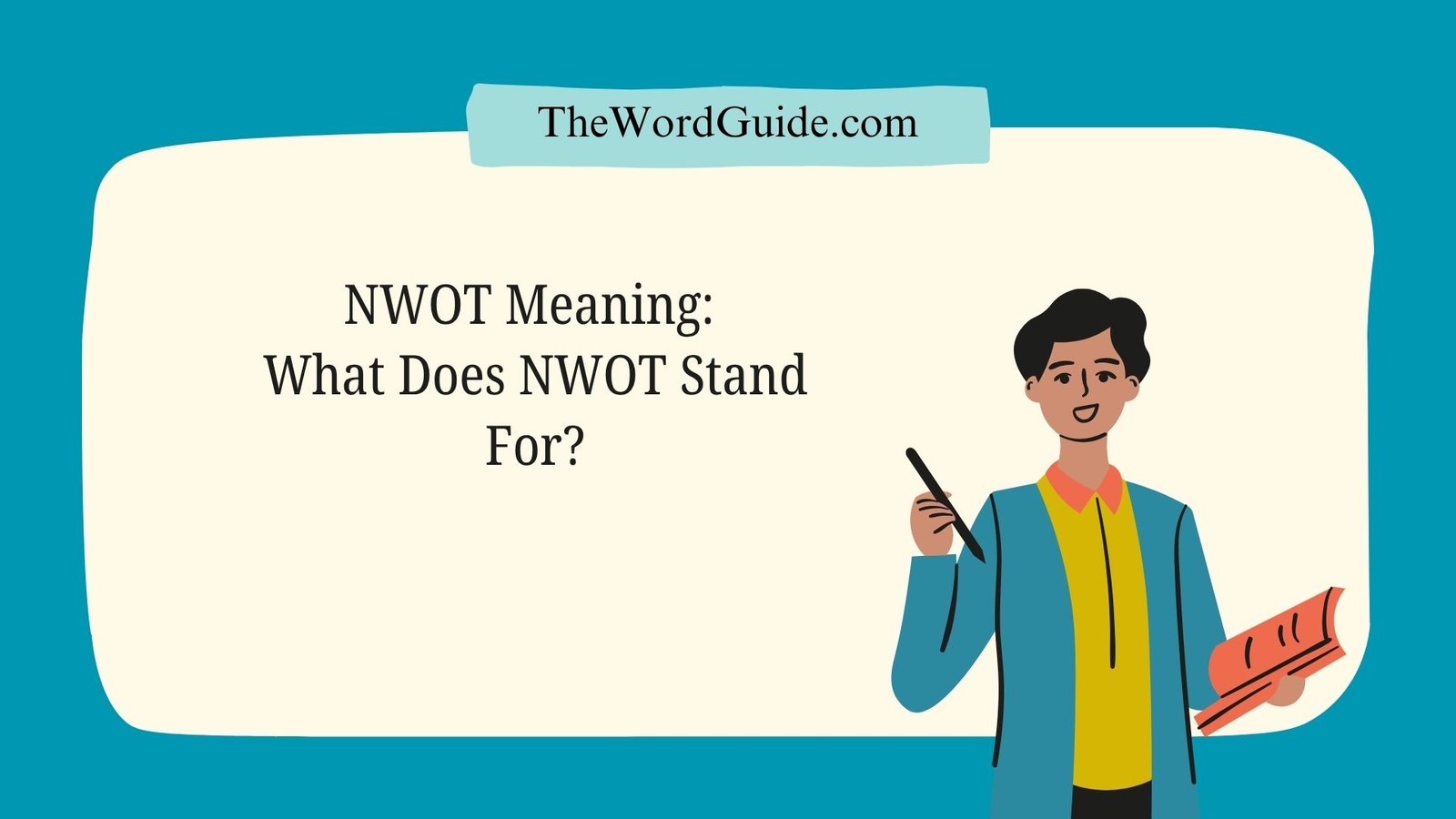
- NWOT stands for “New Without Tags.”
- It is commonly used in online shopping and resale listings, especially for clothing and fashion items.
- An NWOT item is generally described as new or in new condition without its original retail tags.
- NWOT does not always mean never worn, so check the seller’s full description.
- NWT means “New With Tags,” making it different from NWOT.
- An NWOT item may still include its original packaging or accessories.
- Buyers should check photos, condition details, seller information, and return policies before purchasing.
- Sellers should clearly explain whether an NWOT item was never worn, tried on, or used.
What Does NWOT Mean?
NWOT is short for “New Without Tags.” The term is most often found in online marketplaces where individuals sell items they no longer need or want. Instead of writing a long description about the condition, sellers can use NWOT as a quick way to communicate that an item is being presented as new but no longer has its original tags.
The word “new” in this context generally means that the item has little or no evidence of use. The “without tags” part indicates that the manufacturer’s or retailer’s original tags are not attached anymore. Those tags could include a price tag, brand tag, size tag, barcode, or other retail identification.
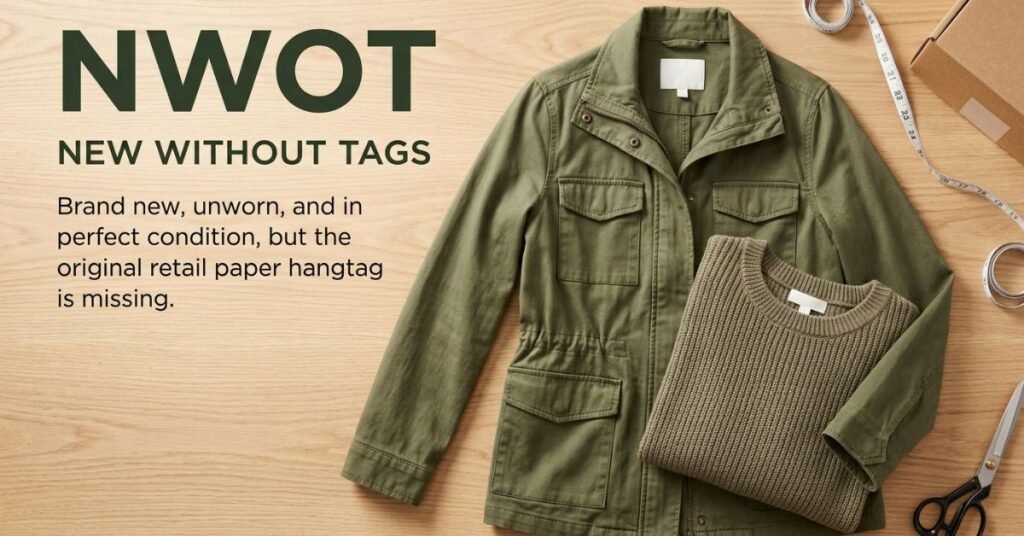
For example, imagine someone purchases a sweater and removes the tag because they intend to wear it. Later, they decide that they do not want the sweater anymore. If the sweater has never actually been worn, they may list it online as NWOT. The product can still be in excellent, unused condition even though the tag is gone.
This is why NWOT should not automatically be interpreted as “used.” The missing tag and the item’s actual usage are two separate things.
The phrase “New Without Tags” mainly tells buyers that the original retail tags are no longer attached. It does not necessarily provide a complete history of the product.
For example, one seller may use NWOT to describe an item that has never been worn or used. Another seller may use the same abbreviation for something that was tried on once but otherwise remains in excellent condition. Both sellers may consider their products “new without tags,” but the actual circumstances are different.
This is why sellers often add extra information after NWOT. Phrases such as “never worn,” “only tried on,” “washed once,” “stored in closet,” or “excellent condition” give buyers a much clearer understanding of what they are purchasing.
If a listing only says “NWOT” without any additional explanation, buyers should avoid making assumptions about the item’s history.
Why Is NWOT So Common in Online Listings?
Online marketplaces are built around quick browsing. Buyers may look through dozens or even hundreds of products in a short period of time, so sellers often use familiar abbreviations to communicate condition quickly.
NWOT is particularly useful for fashion listings because tags are commonly removed from clothing after purchase. Someone might buy an expensive dress for a special occasion, remove the tag, and then never wear it. If they later decide to sell it, NWOT provides a simple way to describe the condition.
The abbreviation also makes listing titles shorter and easier to scan. Instead of writing “new condition without original tags,” a seller can simply write “NWOT.”
Over time, abbreviations such as NWOT, NWT, EUC, and GUC have become familiar to regular users of resale platforms. Understanding them makes it easier to compare listings and determine what sellers are actually offering.
NWOT vs. NWT: What Is the Difference?
One of the most important distinctions for online shoppers is the difference between NWOT and NWT.
NWT means “New With Tags.” It indicates that the item’s original retail tags are still attached. NWOT, on the other hand, means “New Without Tags.” The item is being presented as new, but the original tags are missing or have been removed.
| Abbreviation | Full Meaning | Tags Attached? |
| NWT | New With Tags | Yes |
| NWOT | New Without Tags | No |
| BNWT | Brand New With Tags | Yes |
| BNWOT | Brand New Without Tags | No |
| EUC | Excellent Used Condition | Usually No |
| GUC | Good Used Condition | Usually No |
The difference may seem minor, but it can be important for buyers who want an item in completely original retail condition. An NWT item provides the additional reassurance of having its original tags, while an NWOT item does not.
Does NWOT Mean an Item Has Never Been Worn?
No, not automatically.
This is one of the most important things to understand about the abbreviation. NWOT tells you that the item is being described as new without tags, but it does not independently prove that the item has never been worn.
Some sellers specifically write “NWOT, never worn” because they want to make this distinction clear. Others may say “NWOT, tried on once.” In both cases, the item may be categorized as NWOT, but the buyer receives different information about its history.
A seller should ideally explain whether the item has ever been worn or used. If this information is missing, buyers can ask before purchasing.
For example, an NWOT pair of shoes may have been tried on indoors but never worn outside. An NWOT shirt may have been tried on in front of a mirror but never used for a full day. These details can matter to buyers, especially when purchasing expensive or delicate products.
Can an NWOT Item Still Be Considered New?
In many resale listings, yes. NWOT is generally used for an item that the seller considers new or essentially new but no longer has its original tags.
However, “new” can be interpreted differently by different sellers. A product that has been tried on may still be described as new by one person, while another seller may consider it pre-owned.
This is why the complete condition description is more useful than the abbreviation alone. Buyers should look for specific statements about use, wear, washing, alterations, damage, and storage.
The term should be viewed as a condition label, not as a complete guarantee of the item’s history.
Where Is NWOT Commonly Used?
NWOT is most strongly associated with online fashion and resale communities. It appears frequently in listings for clothing and accessories because these products often have removable retail tags.
You may see NWOT used for dresses, shirts, jackets, jeans, coats, sweaters, shoes, handbags, wallets, hats, sportswear, children’s clothing, jewelry, and other fashion products.
The abbreviation can also appear in social media selling groups and personal listings where individuals sell items directly to other people.
For example, someone might post:
“NWOT women’s winter coat — size M — never worn.”
Another seller might write:
“Designer handbag, NWOT, excellent condition.”
In both cases, NWOT tells the buyer that the original tags are not attached, while the rest of the description provides more information about the condition.
There are many ordinary reasons why an item’s tags may no longer be present even when the product has never been used.
Some people remove tags because they do not like wearing clothing with tags attached. Others remove them after deciding to keep the item. Tags can also be removed when someone washes an item before wearing it or prepares clothing for storage.
A person may also receive an item as a gift and remove the tags without ever using it. Later, if they decide to sell it, the item may be listed as NWOT.
In other situations, a seller may have purchased something intending to use it but changed their mind. The product remains unused, but because the tags have been removed, NWOT becomes a suitable description.
Therefore, the absence of a tag does not automatically indicate that the product has been heavily used.
Although tags may seem insignificant, they can provide useful information to buyers. A retail tag can display the brand, size, original price, product number, barcode, or other details associated with the item.
For some buyers, having the original tags also adds confidence that the product is in its original retail condition. This can be particularly relevant when shopping for premium or designer products.
Tags can also make an item more attractive to collectors or people who want to resell it later. An item with its original tags may sometimes command a higher price than an otherwise identical item without them.
However, the value of tags varies depending on the product and the buyer. For everyday clothing, some shoppers may not care whether the tags are attached.
Is NWOT the Same as Used?
Not necessarily.
An NWOT item can be unused, while a used item has generally been worn or used previously. The key point is that NWOT describes an item as new without tags, whereas “used” describes an item’s history of use.
For example, someone may purchase a shirt, remove the tag, and never wear it. That shirt can be listed as NWOT.
Another person may wear the same shirt five times and then sell it in excellent condition. That shirt would generally be better described as used or pre-owned, even if it looks almost new.
This distinction is especially important because sellers should describe products honestly. If an item shows clear signs of use, simply calling it NWOT can give buyers the wrong impression.
Also Read! FCFS Meaning: What Does FCFS Stand For?
NWOT vs. Pre-Owned
The terms NWOT and pre-owned can overlap in some listings, but they are not identical.
Pre-owned simply means that the item has previously belonged to someone. It does not necessarily tell you how much it was used. An item could be pre-owned but never worn, while another pre-owned item could have been used extensively.
NWOT generally communicates a stronger condition claim. It tells the buyer that the item is being presented as new even though its original tags are missing.
If you’re buying something listed as NWOT, look for specific statements that explain whether the item was actually worn or used.
Does NWOT Mean Original Packaging Is Missing?
No. NWOT refers specifically to tags, not packaging.
An item can be NWOT while still having its original box, dust bag, protective wrapping, instruction booklet, or other packaging.
For example, a handbag could be listed as NWOT because its paper tag has been removed, while the original dust bag and box are still included.
Likewise, a pair of shoes could be NWOT but still come in the original shoe box.
If packaging matters to you, always check the seller’s description. The abbreviation itself does not tell you whether original packaging is included.
What Should Sellers Include in an NWOT Listing?
Using the abbreviation in a title is helpful, but a detailed description makes a listing much more trustworthy.
A seller should explain why the item is being described as NWOT and provide relevant information about its history. If the product has never been worn, that should be stated clearly. If it was tried on, the seller should mention that as well.
Details about size, color, material, measurements, condition, defects, alterations, and included accessories can also help buyers make better decisions.
Clear photographs are equally important. Images should show the overall item as well as important details such as labels, stitching, hardware, soles, corners, or other areas where wear could be visible.
A listing that says “NWOT, never worn, original packaging included, no flaws” gives buyers considerably more useful information than simply writing “NWOT.”
What Should Buyers Check Before Purchasing an NWOT Item?
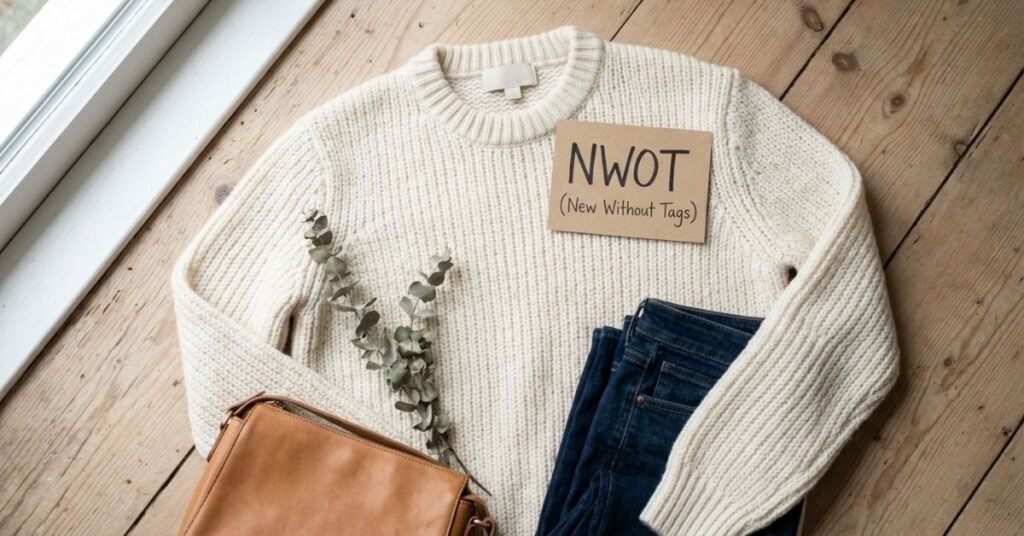
Buyers should treat NWOT as a useful starting point rather than the entire condition report.
First, read the complete product description. Look for information about whether the item was worn, tried on, washed, altered, repaired, or stored.
Next, examine the photographs carefully. Look for stains, discoloration, scratches, loose threads, stretched fabric, scuff marks, or other signs of use.
If the listing does not answer an important question, contact the seller before purchasing. Asking whether an item has ever been worn or whether all original accessories are included can prevent misunderstandings.
It is also useful to check the seller’s ratings and reviews, particularly when purchasing expensive products. A strong seller history can provide additional confidence, although buyers should still evaluate each listing independently.
Finally, understand the marketplace’s return and buyer-protection policies before completing the purchase.
Can NWOT Items Be Cheaper Than NWT Items?
They can be, although there is no universal rule.
Some buyers specifically want products with their original tags because they feel more confident about the item’s condition. As a result, an NWT item may sometimes sell for more than an otherwise similar NWOT item.
However, price depends on many factors, including brand, product demand, rarity, age, condition, season, size, and availability.
An NWOT designer handbag could still be considerably more expensive than an NWT item from an ordinary brand. Therefore, the missing tags are only one part of the overall pricing equation.
Is Buying NWOT Safe?
Buying an NWOT item can be perfectly reasonable, but buyers should evaluate the individual listing rather than assuming every NWOT product has the same condition.
The safest approach is to purchase from reputable sellers, review detailed photographs, read the description carefully, and ask questions when necessary.
For expensive branded products, buyers should pay additional attention to authenticity. The absence of tags does not prove that an item is counterfeit, but it can mean there is less original retail information available for comparison.
If a deal looks unusually attractive, take time to examine the seller, photographs, product details, and marketplace protections before making a decision.
Common Examples of NWOT Listings
The following examples show how NWOT may appear in everyday online listings:
“NWOT floral dress, never worn.”
This means the seller says the dress has not been worn and no longer has its original tags.
“NWOT men’s jacket, tried on once.”
The jacket has no tags and was briefly tried on.
“NWOT sneakers, original box included.”
The shoes are being sold as new without tags, but the original box is still available.
“NWOT handbag, excellent condition.”
The seller describes the handbag as new without tags, while additional information about its history should ideally appear in the description.
These examples demonstrate why the words following NWOT can be just as important as the abbreviation itself.
Common Abbreviations Similar to NWOT
Online resale platforms use many condition-related abbreviations. Learning these terms can make product listings much easier to understand.
| Abbreviation | Meaning | General Use |
| NWOT | New Without Tags | New item without original tags |
| NWT | New With Tags | New item with original tags |
| BNWT | Brand New With Tags | Brand-new item with tags |
| BNWOT | Brand New Without Tags | Brand-new item without tags |
| EUC | Excellent Used Condition | Previously used but excellent condition |
| GUC | Good Used Condition | Previously used and in good condition |
| VGUC | Very Good Used Condition | Used item with relatively little wear |
| NOS | New Old Stock | Older stock that remains unused |
Not every marketplace uses all of these abbreviations, and individual sellers may interpret condition terms differently. When in doubt, the full description should take priority.
Common Mistakes Buyers Make With NWOT
One common mistake is assuming that NWOT automatically means never worn. As explained earlier, the abbreviation does not independently confirm that. Buyers should look for explicit statements about usage.
Another mistake is assuming that NWOT means the item comes with every original accessory. Tags, packaging, receipts, boxes, dust bags, and other accessories are separate things. A listing should specify what is included.
Some buyers also assume that an NWOT item must be cheaper than an NWT item. Although missing tags can influence price, other factors may have a much larger effect.
Finally, buyers sometimes focus so much on the abbreviation that they overlook photographs and detailed condition notes. The actual product description should always be considered alongside the NWOT label.
How Sellers Can Use NWOT Honestly
Sellers should use NWOT only when it accurately reflects the item’s condition. If a product has been worn several times, simply labeling it NWOT may be misleading even if the original tags were removed shortly after purchase.
Being transparent is better than relying on a short abbreviation. A seller can explain whether the item was never worn, tried on, washed, stored, or used in any other way.
Honest descriptions also help sellers attract the right buyers. Someone looking for a truly unused item may have different expectations from someone searching for an excellent pre-owned product.
The more accurate the listing, the less likely there will be confusion after the sale.
Why Understanding NWOT Matters
Understanding abbreviations such as NWOT can make online shopping much easier. Resale platforms often contain thousands of listings, and sellers need a quick way to communicate product condition.
When buyers understand the terminology, they can compare listings more effectively and ask better questions. They can also distinguish between an item that still has its tags, an item without tags, and an item that has clearly been used.
This is especially helpful when shopping for clothing and accessories where condition can have a significant impact on value.
Final Thoughts on NWOT Meaning
NWOT means “New Without Tags.” It is a common abbreviation used primarily in online resale and shopping listings to describe an item that is being presented as new but no longer has its original retail tags.
The most important thing to remember is that NWOT does not automatically mean never worn. An item may be completely unused, briefly tried on, or handled in another way. The abbreviation only provides a general condition description, so buyers should examine the complete listing before making a purchase.
For sellers, the best approach is to combine NWOT with an honest explanation of the item’s history and condition. For buyers, carefully reading descriptions, checking photographs, asking questions, and reviewing seller information can help ensure that the product matches their expectations.
Once you understand the difference between NWOT, NWT, pre-owned, and other common condition terms, online resale listings become much easier to read and compare.
Also Read! Declan Meaning: A Complete Guide to This Irish Name
Frequently Asked Questions About NWOT
What does NWOT stand for?
NWOT stands for “New Without Tags.” It is commonly used in online shopping and resale listings to describe an item that is considered new or in new condition but does not have its original retail tags attached.
What does NWOT mean on clothing?
When NWOT appears on a clothing listing, it usually means the clothing is being sold as new but the original tags have been removed. The seller may also specify whether the item was never worn, tried on, or stored.
Does NWOT mean never worn?
Not necessarily. NWOT only means New Without Tags. Some NWOT items have never been worn, while others may have been tried on. Buyers should read the seller’s full description to understand the item’s actual history.
What is the difference between NWOT and NWT?
NWOT means New Without Tags, while NWT means New With Tags. An NWT item still has its original retail tags attached, whereas an NWOT item does not.
Is NWOT the same as brand new?
NWOT is often used to describe an item as new or essentially new, but it does not guarantee that the product has never been worn or handled. Buyers should check the complete condition description before purchasing.
Can an NWOT item have original packaging?
Yes. NWOT only refers to the absence of original tags. An item can still have its original box, dust bag, packaging, instructions, or other accessories.
People may remove tags for many reasons, such as trying on clothing, preparing an item for personal use, washing it, storing it, or simply because they do not want the tags attached. The item may still remain unused.
Are NWOT items usually cheaper than NWT items?
They can be, because some buyers prefer products that still have their original tags. However, pricing depends on factors such as brand, demand, condition, rarity, and product type, so an NWOT item is not always cheaper.
Should I buy an NWOT item online?
An NWOT item can be a good purchase, but buyers should review the description, photographs, seller feedback, and return policy before buying. For expensive products, asking the seller about the item’s history and authenticity can also be helpful.
What should I check before buying an NWOT item?
Check whether the item was ever worn or used, look for signs of damage or wear in the photographs, confirm what accessories are included, and review the seller’s return policy. If important details are missing, ask the seller before purchasing.
What other abbreviations are similar to NWOT?
Common condition abbreviations include NWT (New With Tags), BNWT (Brand New With Tags), BNWOT (Brand New Without Tags), EUC (Excellent Used Condition), and GUC (Good Used Condition). Their exact use can vary between marketplaces and sellers.